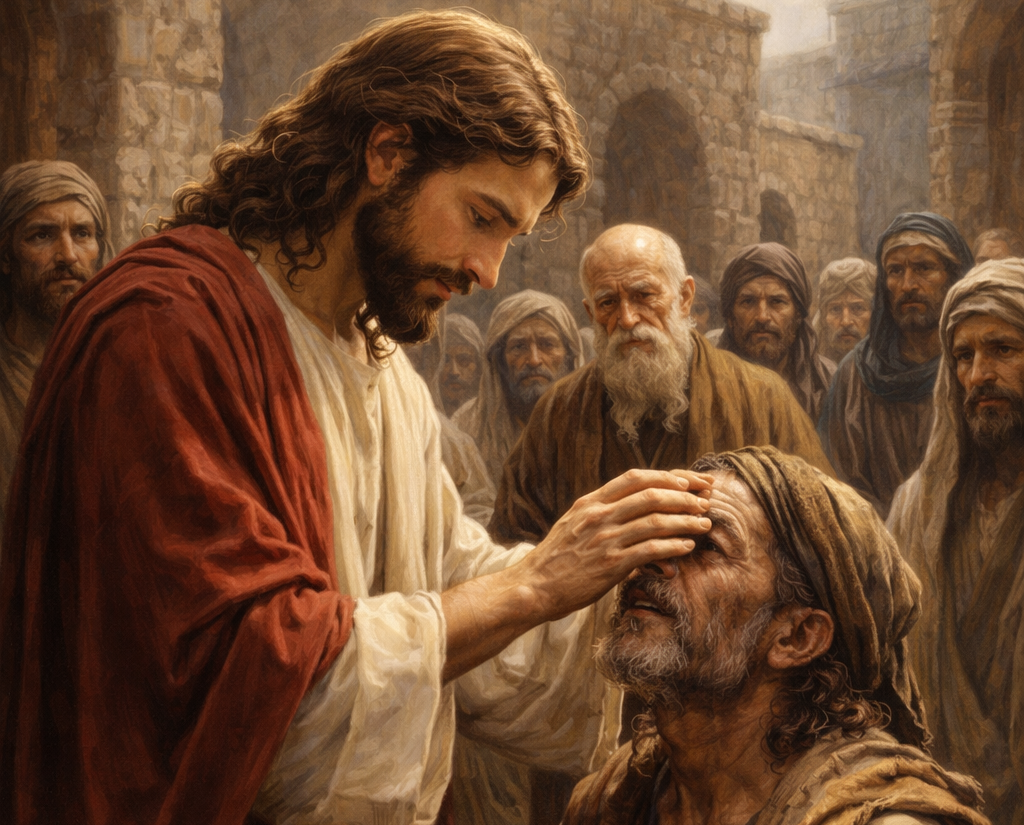

This Sunday’s Gospel from the book of John pertains to Jesus' healing of the blind man.
Jesus’ disciples asked him:
“Rabbi, who sinned, this man or his parents, that he was born blind?”
Jesus answered, “Neither he nor his parents sinned; it is so that the works of God might be made visible through him.”
The response of Jesus to his disciples highlights a perennial question we all ask ourselves. “Why do good people suffer? Why does suffering happen to people who are meek, gentle, and abiding?” And for those of us who are brazen, “Why can’t suffering be contained to people who are a menace to society?”
And God’s answer is: “So that the works of God might be made visible through [them].”
A patient person is a patient person because he is able to endure injustices and trifles with self-control and even mercy. Without the ability to control oneself in charity in the midst of trying circumstances, one cannot merit the title of “patient”. So, in a way, it is thanks to the injustices and the trifles that help manifest and reveal one’s patience.
One cannot be a generous person, if this person is not self-sacrificing, self-giving, benevolent, and charitable. The circumstances that drive these people to particular virtues are the occasions whereby people externally manifest and merit the titles of their virtues.
So, difficult circumstances are great occasions and opportunities that help reveal virtue and the power of God.
Again, why do good people suffer? “So that the works of God might be made visible through [them].”
The injustice of being born blind was permitted by God, so that he might be able to manifest his glory of healing. Through the blindness of this one man, Jesus’ compassionate heart is revealed as he intentionally molds clay with his saliva to smear on the man’s eyes. The dust of the earth purified by the divine spittle of Christ recreates and heals the blindness of man. Heaven meets earth in a real and tangible way to restore what has been lost.
In the midst of our sufferings then, it might be helpful to remember that God is permitting such sorrows so that His glory is made visible through the trials, even more than when there is no trial.
After the blind man is healed and Jesus disappears for a time, the unbelieving Pharisees continue to pester the man about who had healed him without really caring to interiorly receive and accept his answer.
But again the glory of God is revealed in the man’s profession of faith:
“This is what is so amazing, that you do not know where he is from, yet he opened my eyes. We know that God does not listen to sinners, but if one is devout and does his will, he listens to him. It is unheard of that anyone ever opened the eyes of a person born blind. If this man were not from God, he would not be able to do anything.”
We learn from this that God’s revelation is two-fold. It begins with his initiative, but it calls us to respond in faith, to participate in the works of revelation by the profession of our assent, and the profession of our belief in Him, for the benefit of those around us as they witness and are moved by our faith.
So let us, once more, in this Fourth week of Lent, be courageous and carry our crosses so that our Redeemer might be able to use whatever gives us distress to reveal his victory.